Sitemap
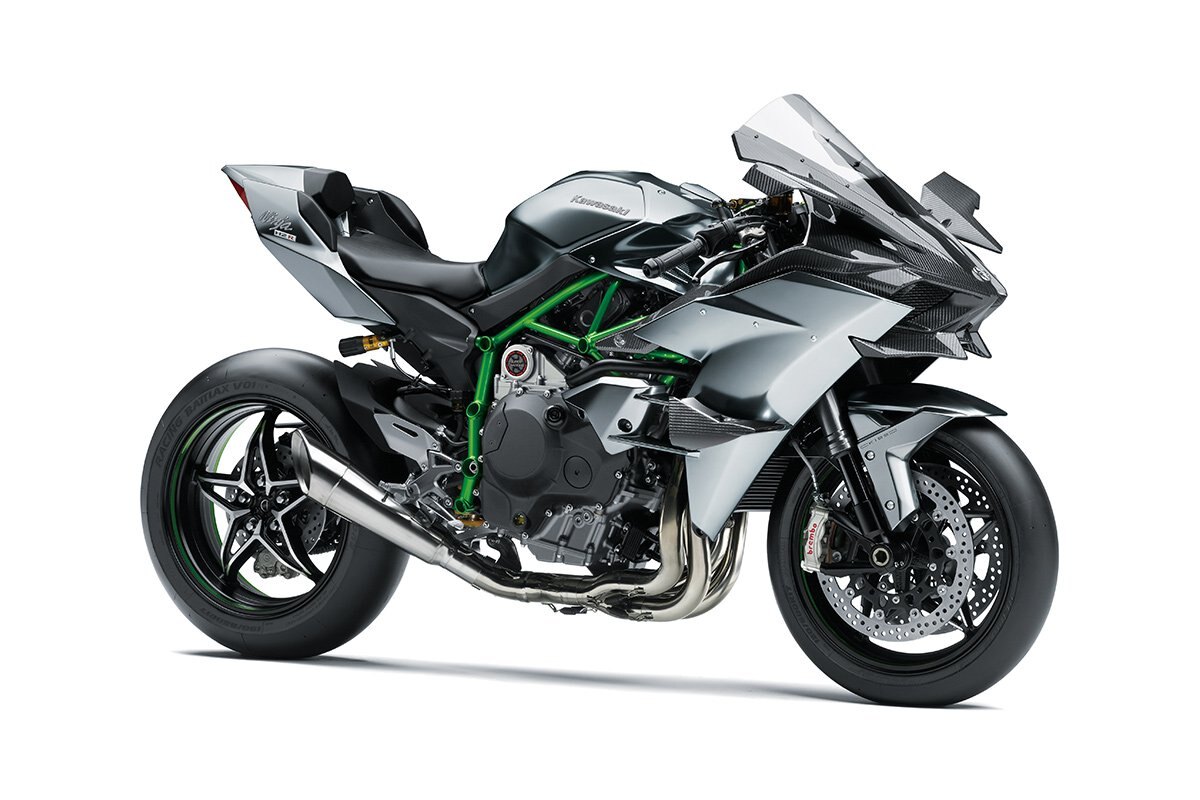
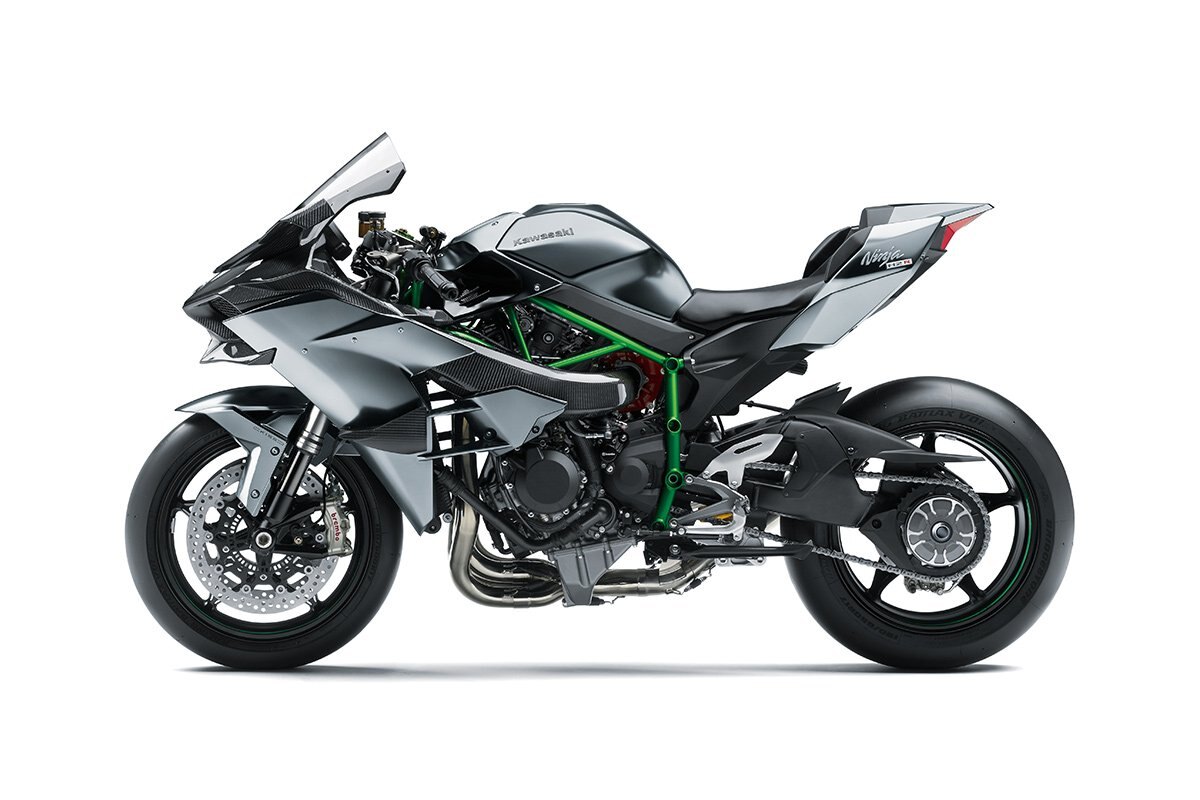
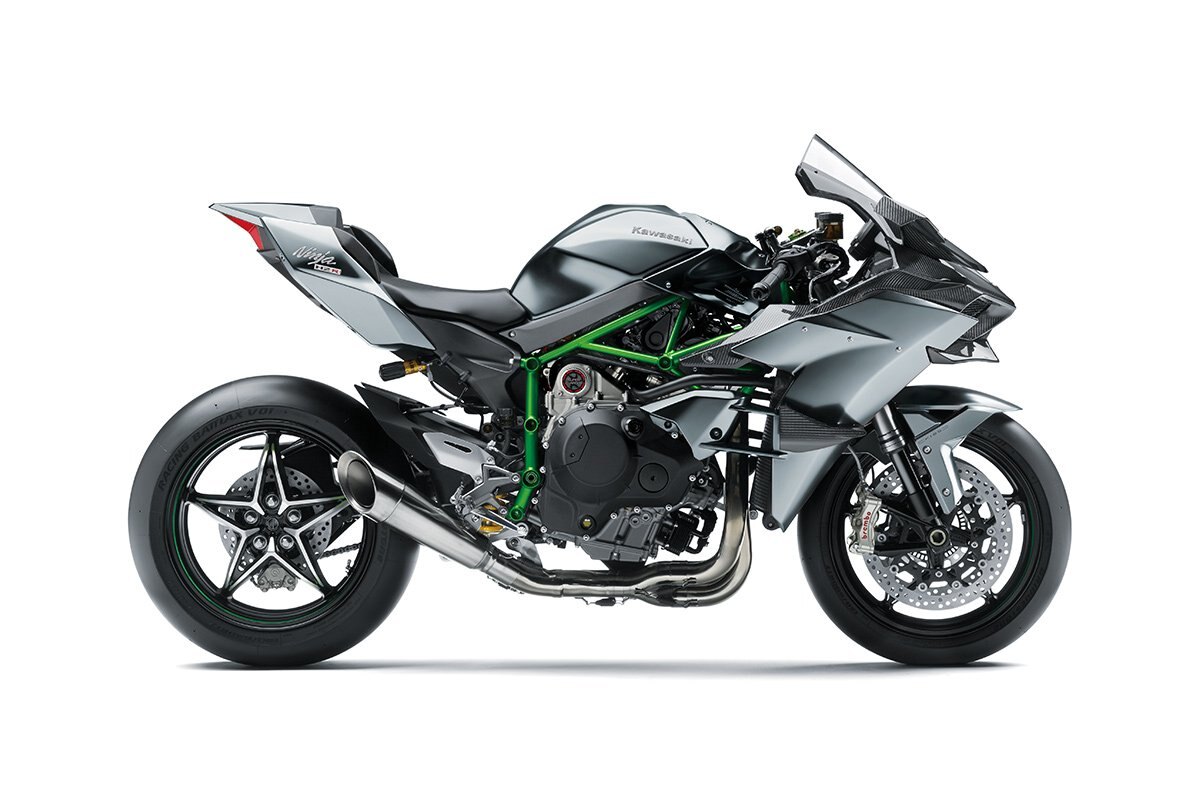
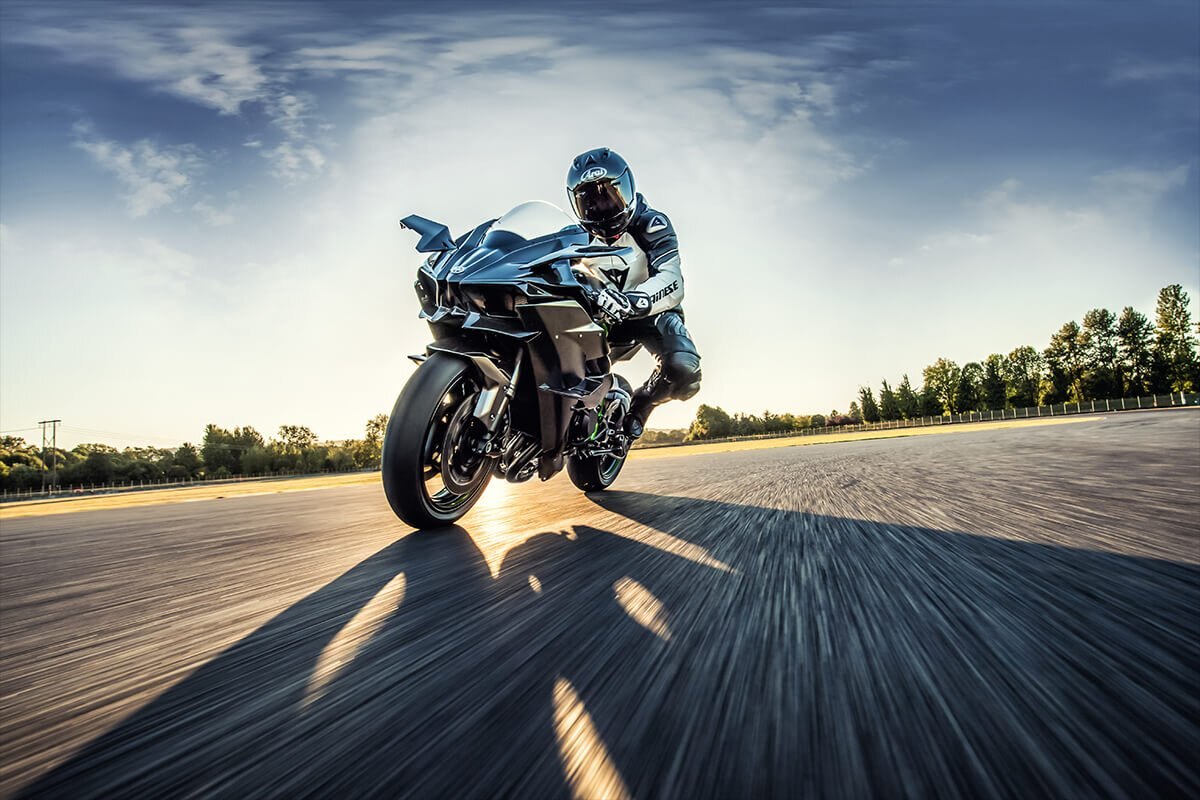
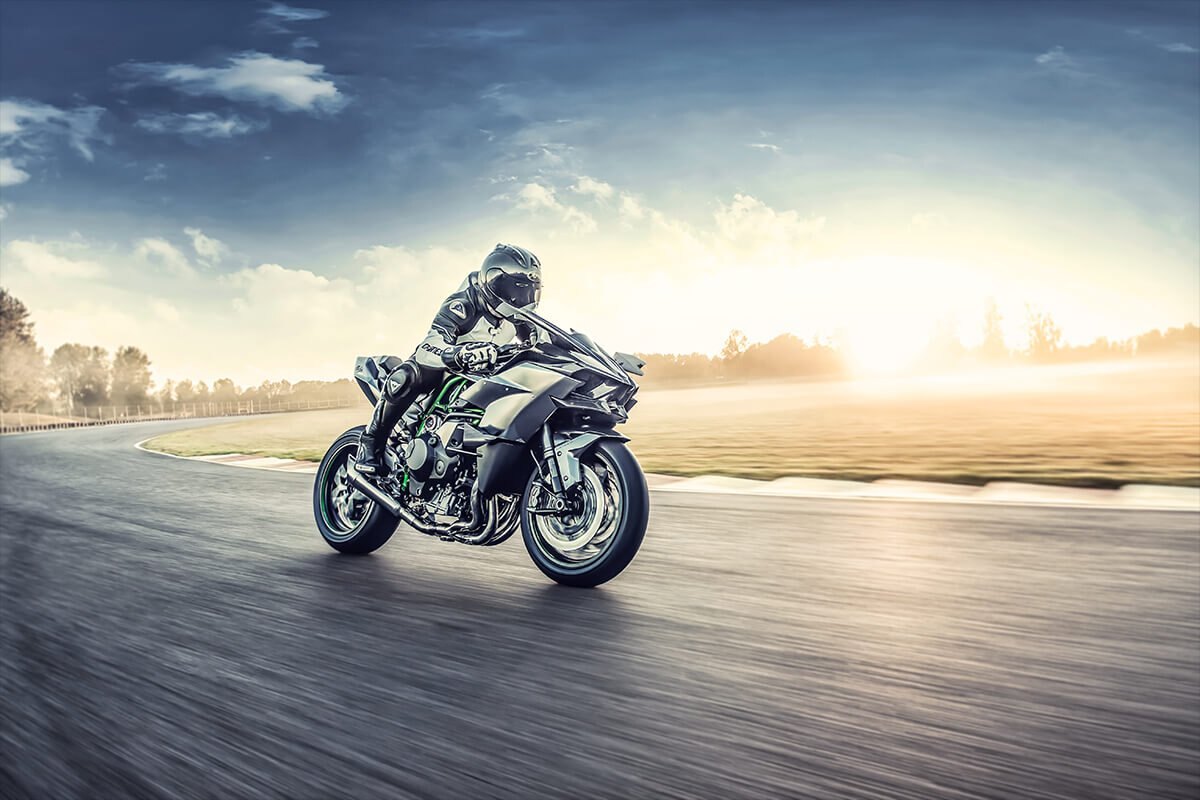
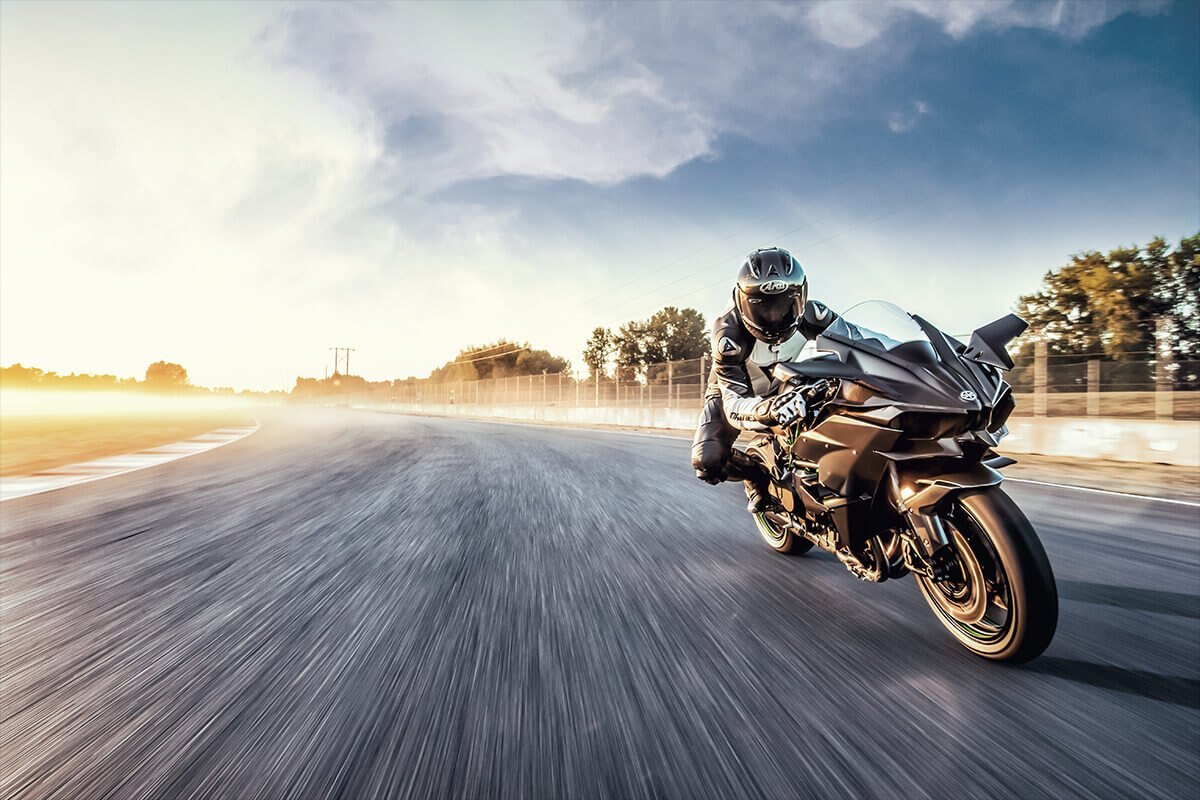
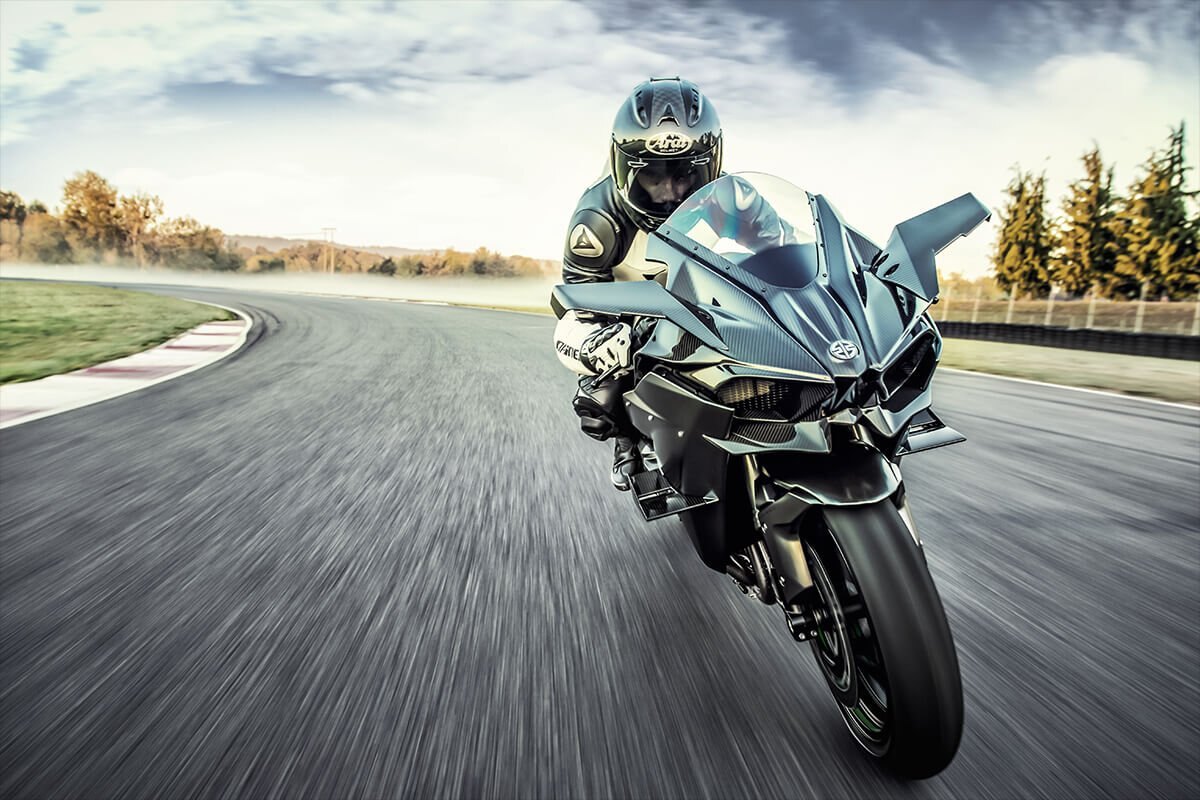
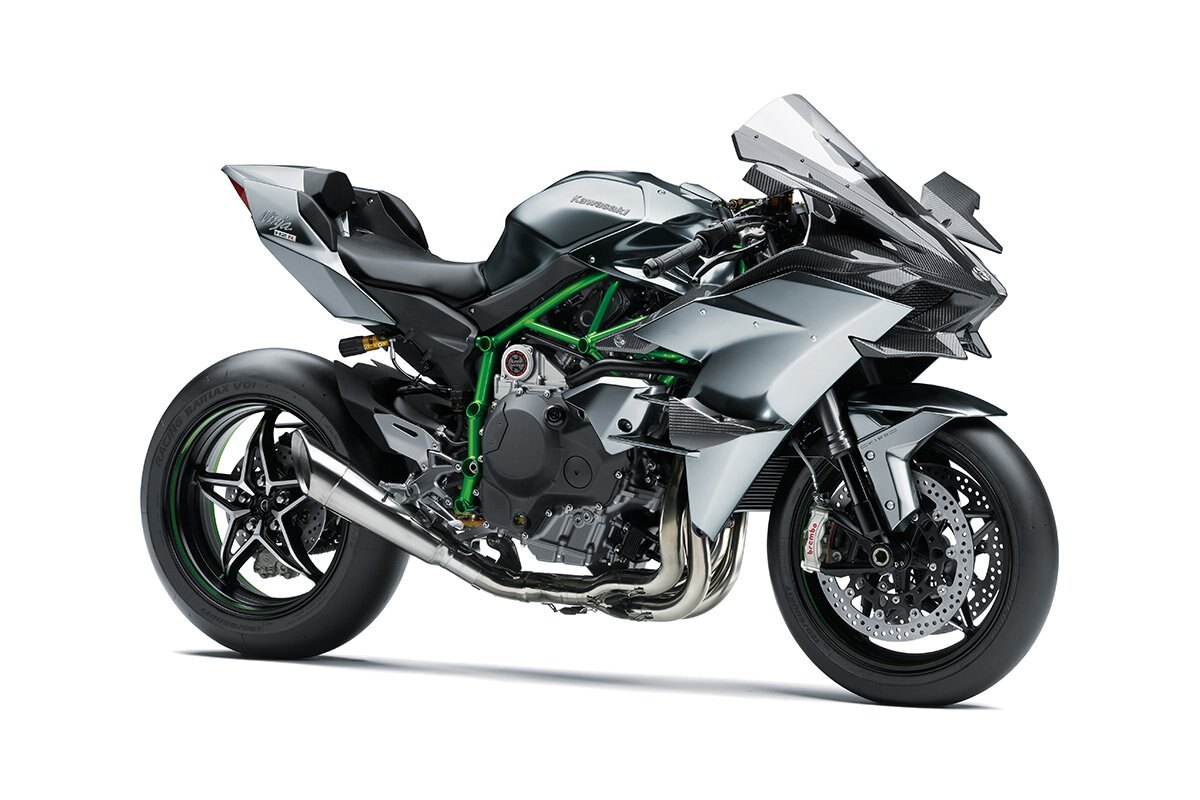
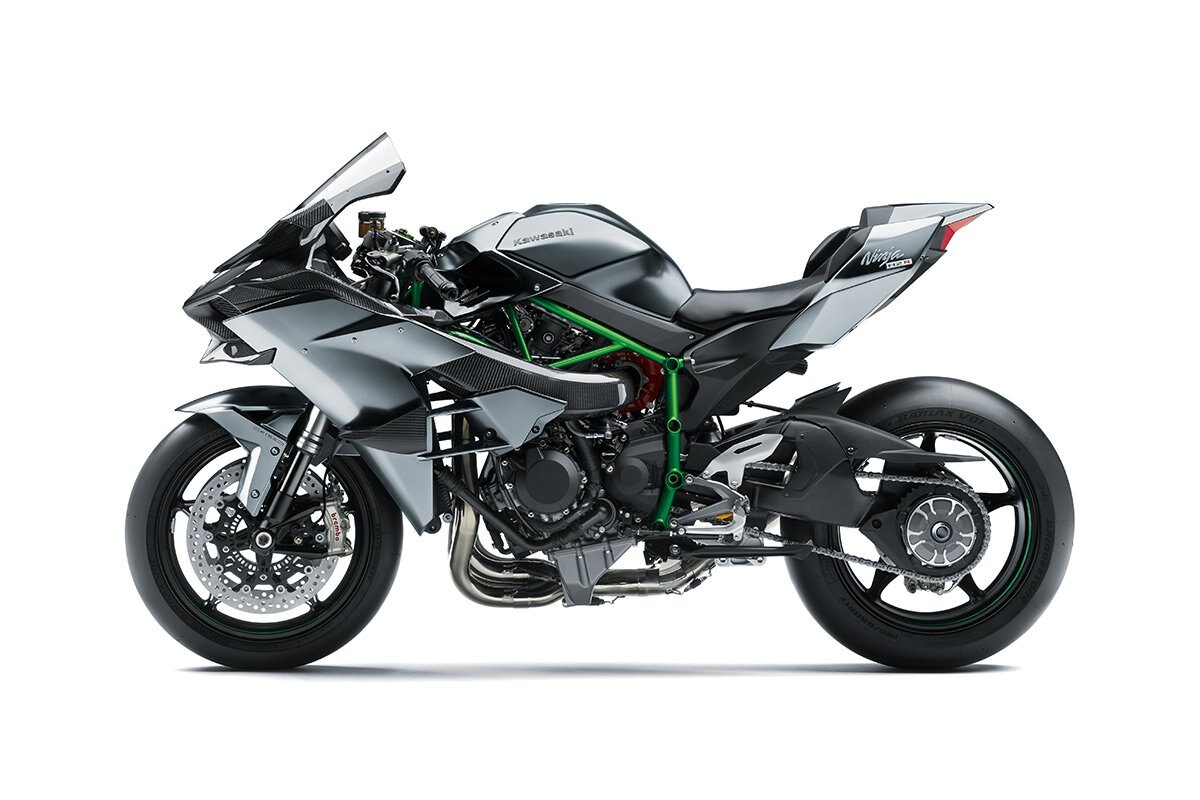
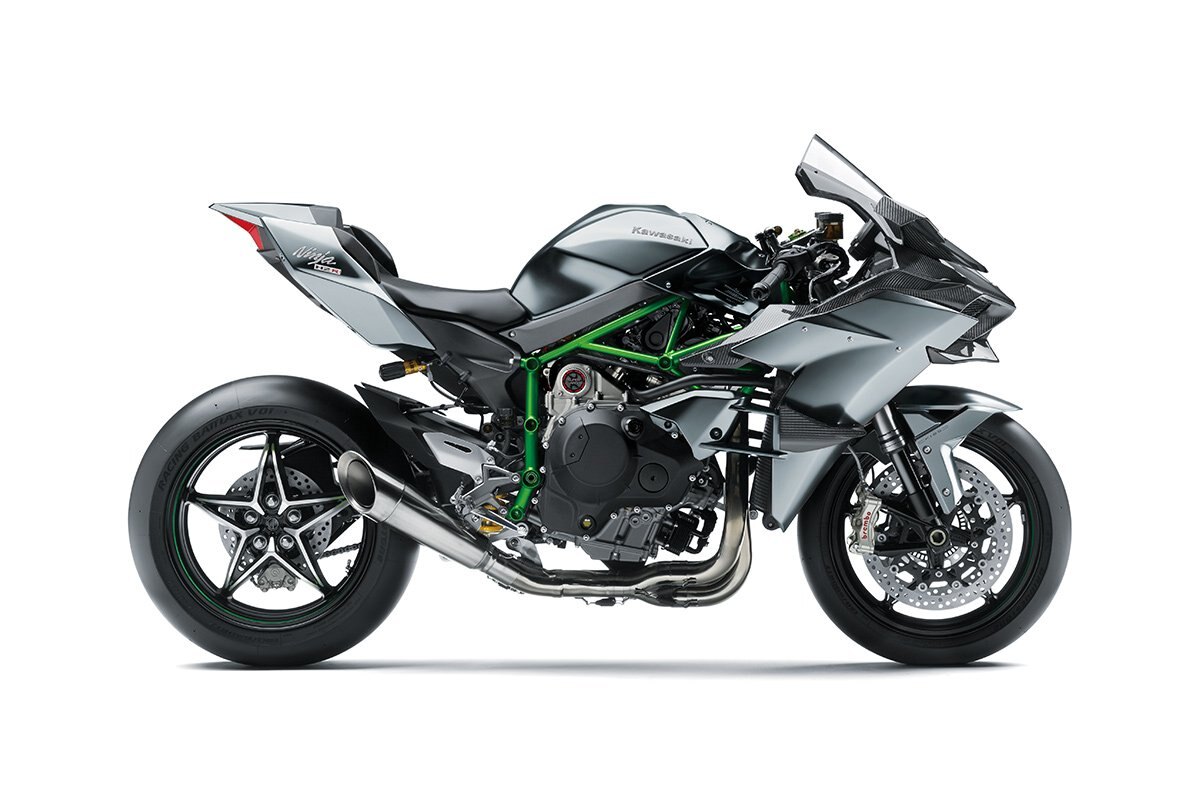
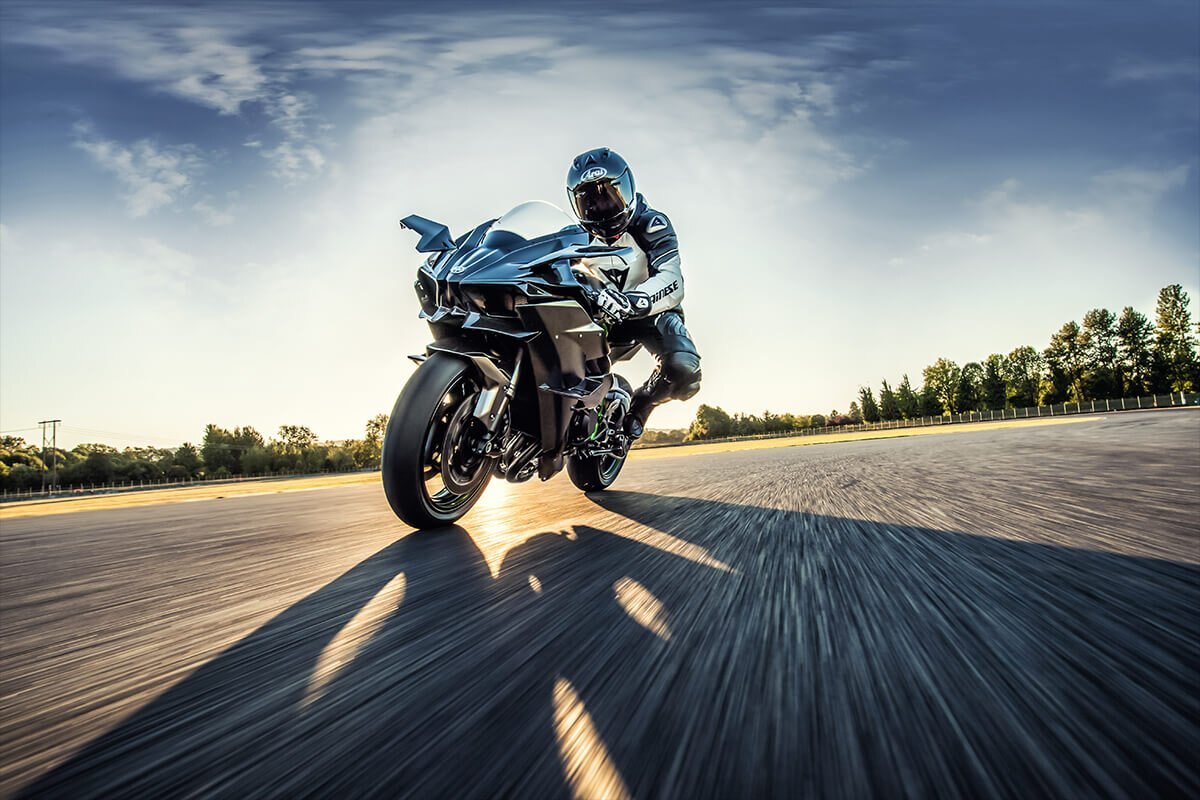
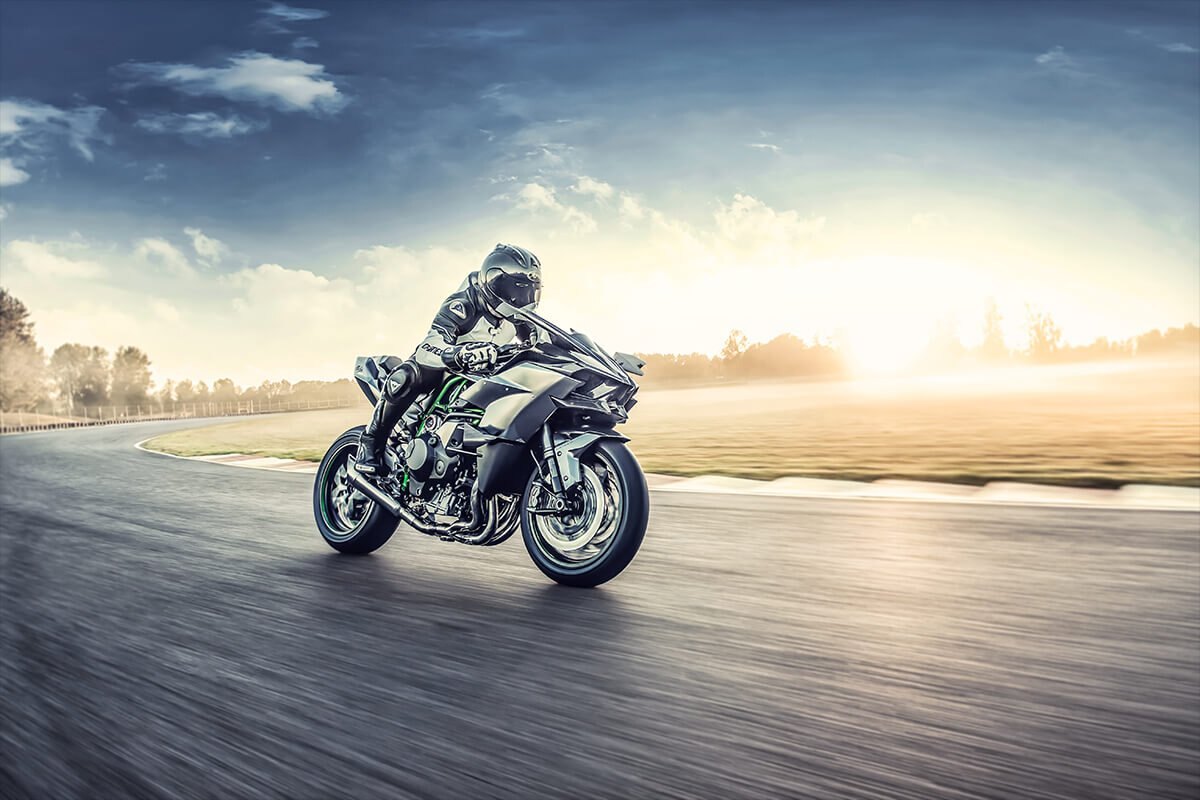
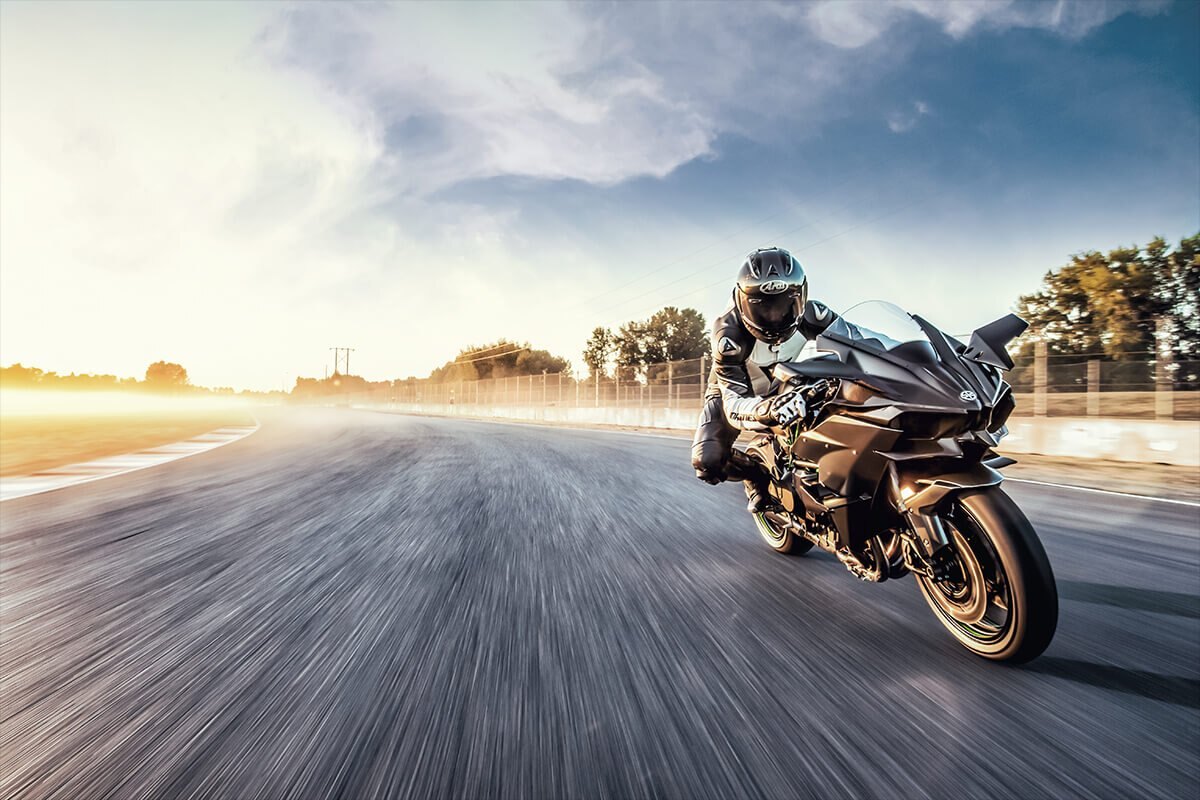
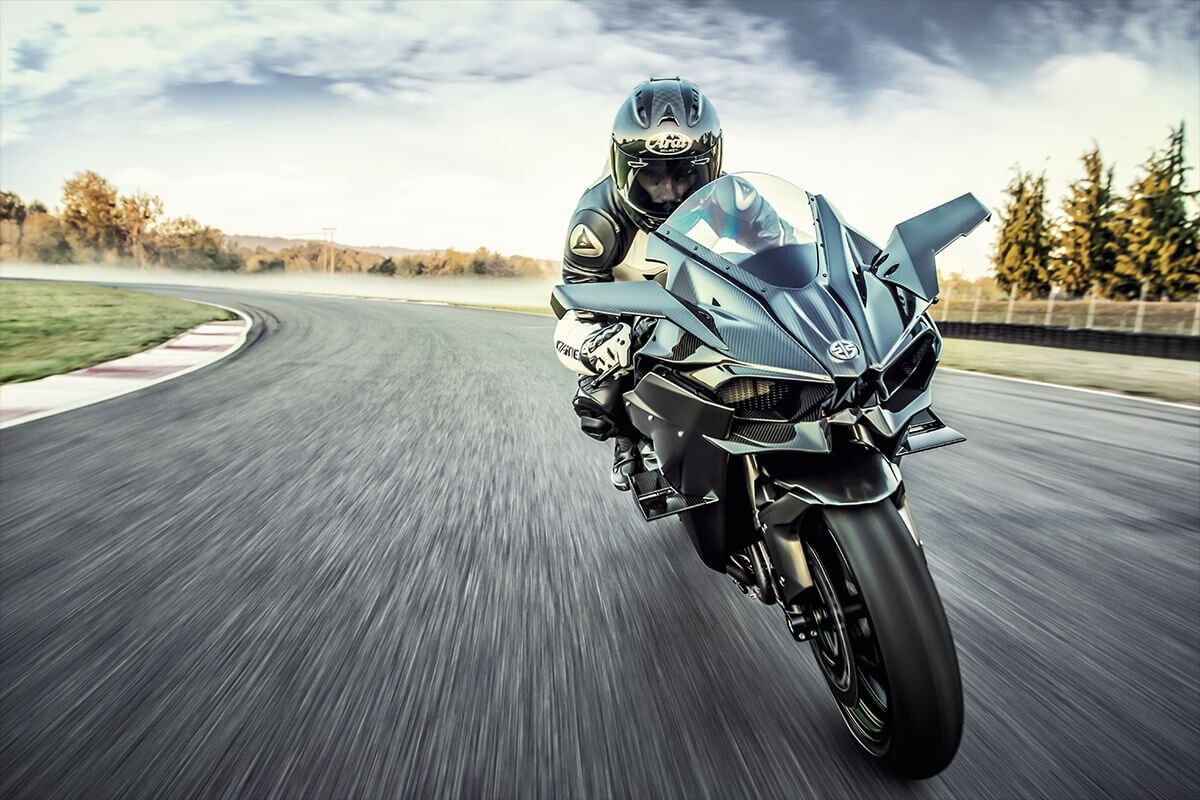
2026 Kawasaki NINJA H2R
 Print
Print Contact Us
 Share this


|
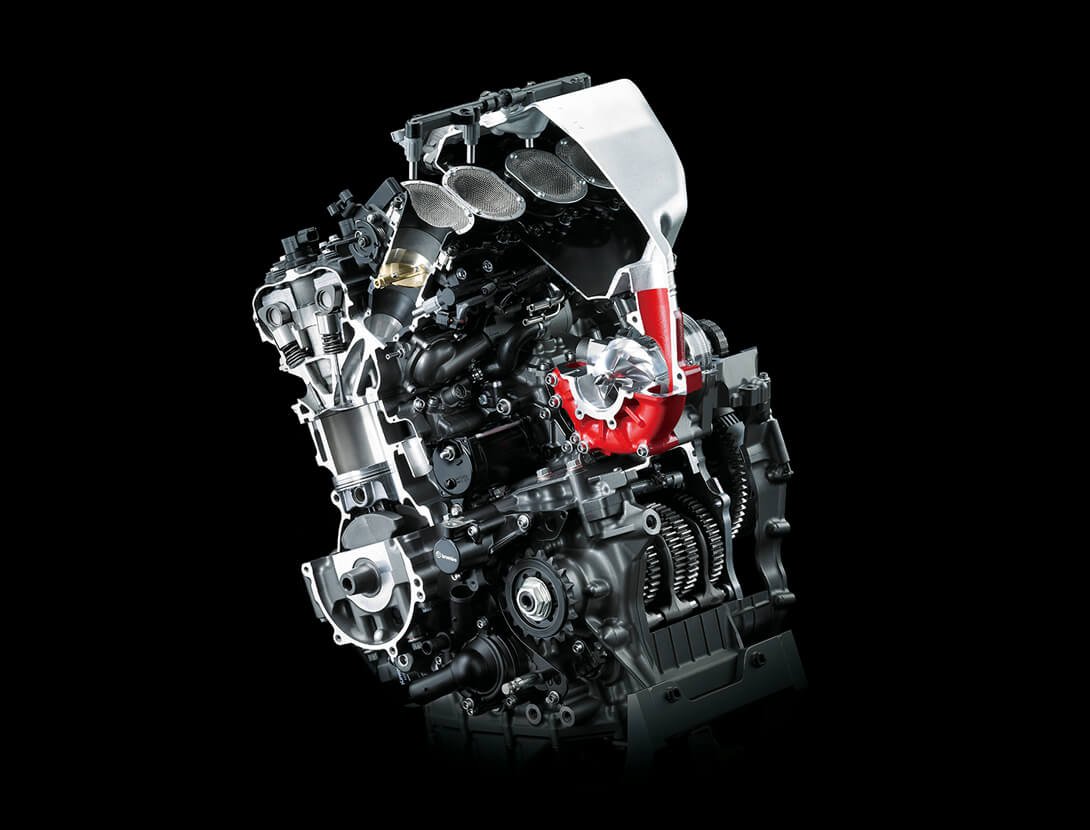
The development of the Ninja H2R motorcycle goes beyond the boundaries of any other Kawasaki motorcycle. Born of unprecedented inter-company collaboration within the Kawasaki Heavy Industries, Ltd. (KHI) Group, the world's only limited production supercharged hypersport model represents the pinnacle of Kawasaki engineering, delivering astonishing acceleration and mind-bending top speed suitable only for closed courses. |
FEATURING:
|
ADDITIONAL VEHICLE FEATURES:
|
|
ELECTRONIC THROTTLE VALVES
|
KAWASAKI ENGINE BRAKE CONTROLThe Kawasaki Engine Brake Control system allows riders to select the amount of engine braking they prefer. When the system is activated, the engine braking effect is reduced, providing less interference when riding on the track. |
KCMF (KAWASAKI CORNERING MANAGEMENT FUNCTION)
Using the latest evolution of Kawasaki’s advanced modeling software and feedback from a compact IMU (Inertial Measurement Unit) that gives an even clearer real-time picture of chassis orientation, KCMF monitors engine and chassis parameters throughout the corner – from entry, through the apex, to corner exit – modulating brake force and engine power to facilitate smooth transition from acceleration to braking and back again, and to assist riders in tracing their intended line through the corner. The systems that KCMF oversees vary by model, but may include: |
KLCM (KAWASAKI LAUNCH CONTROL MODE)
|
KQS (KAWASAKI QUICK SHIFTER)
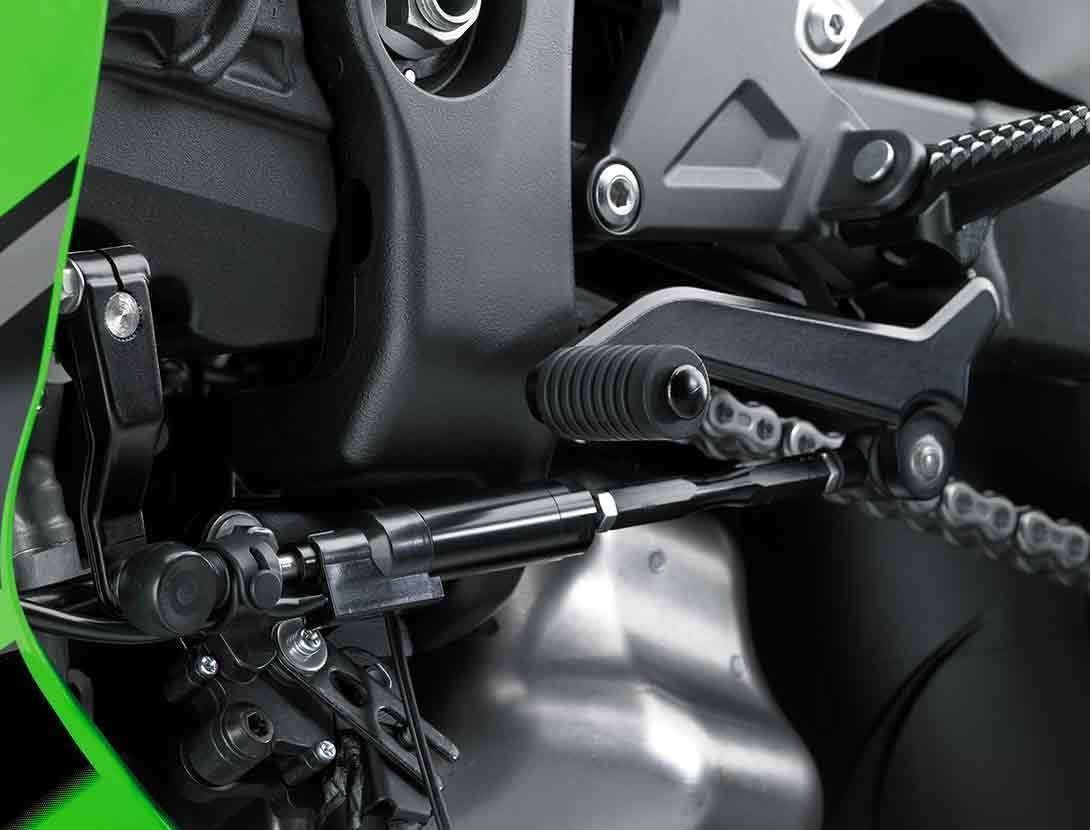
Designed to help riders maximize their acceleration on the track by enabling clutchless upshifts with the throttle fully open, KQS detects that the shift lever has been actuated and sends a signal to the ECU to cut ignition so that the next gear can be engaged without having to use the clutch. On models that offer clutchless downshifts, during deceleration the system automatically controls engine speed so that the next lower gear can be selected without operating the clutch. |
|
Chassis Management Techn ologyABS (ANTI-LOCK BRAKE SYSTEM)Kawasaki ABS systems use front and rear wheel sensors to constantly monitor wheel speed. Should information from either of the sensors indicate that wheel lock has occurred, the ABS ECU directs the pump in the ABS unit to modulate brake fluid pressure (releasing and reapplying pressure so that traction can be regained) until normal operation resumes. ABS offers rider reassurance that contributes to greater riding enjoyment. |
|
|
|
 Engine Management Technology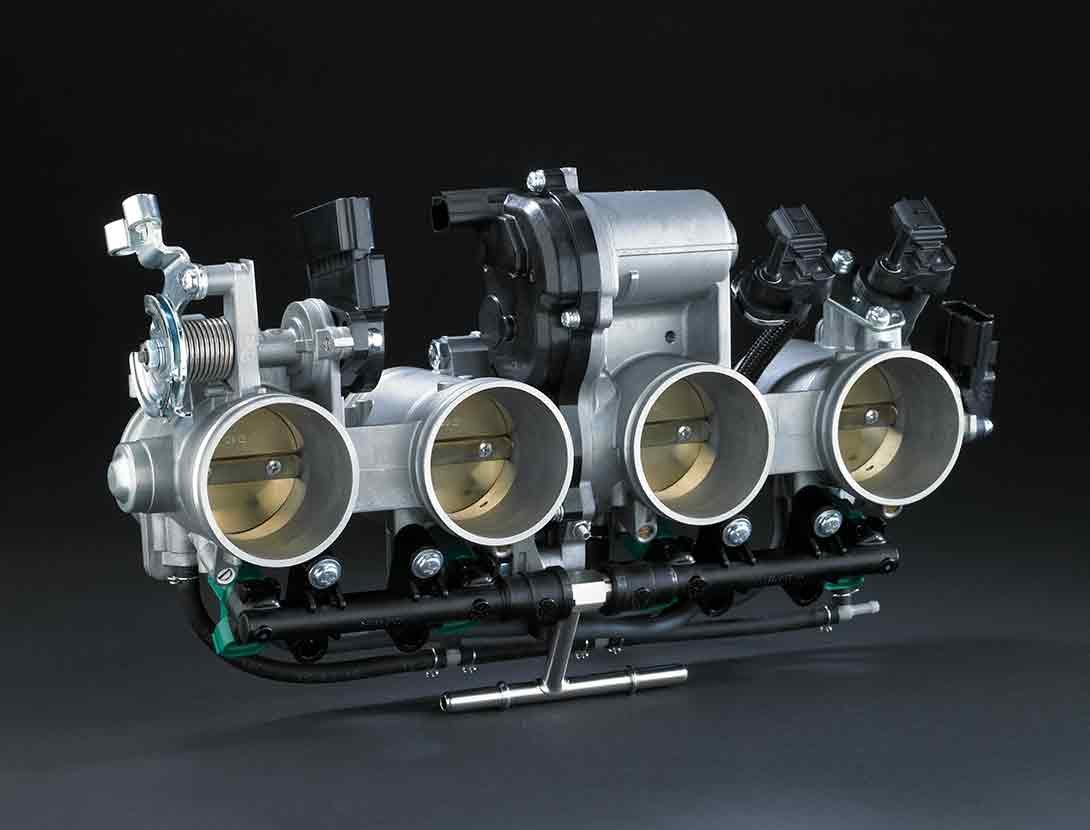
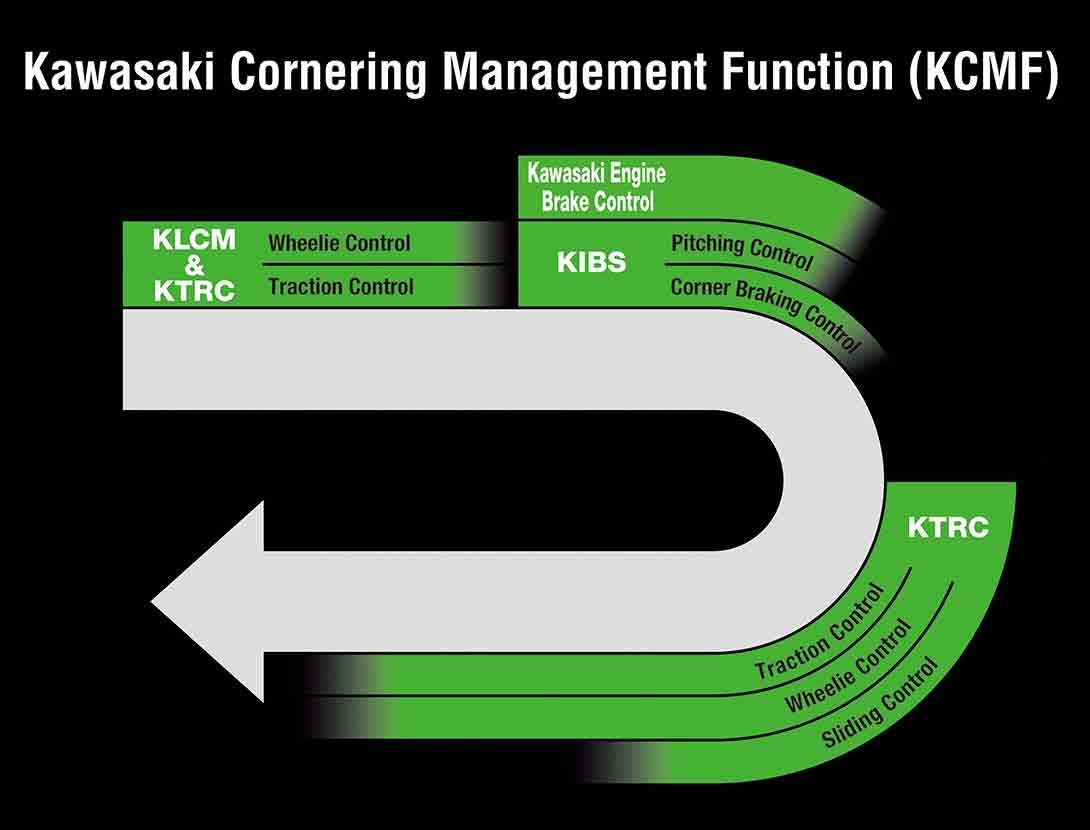
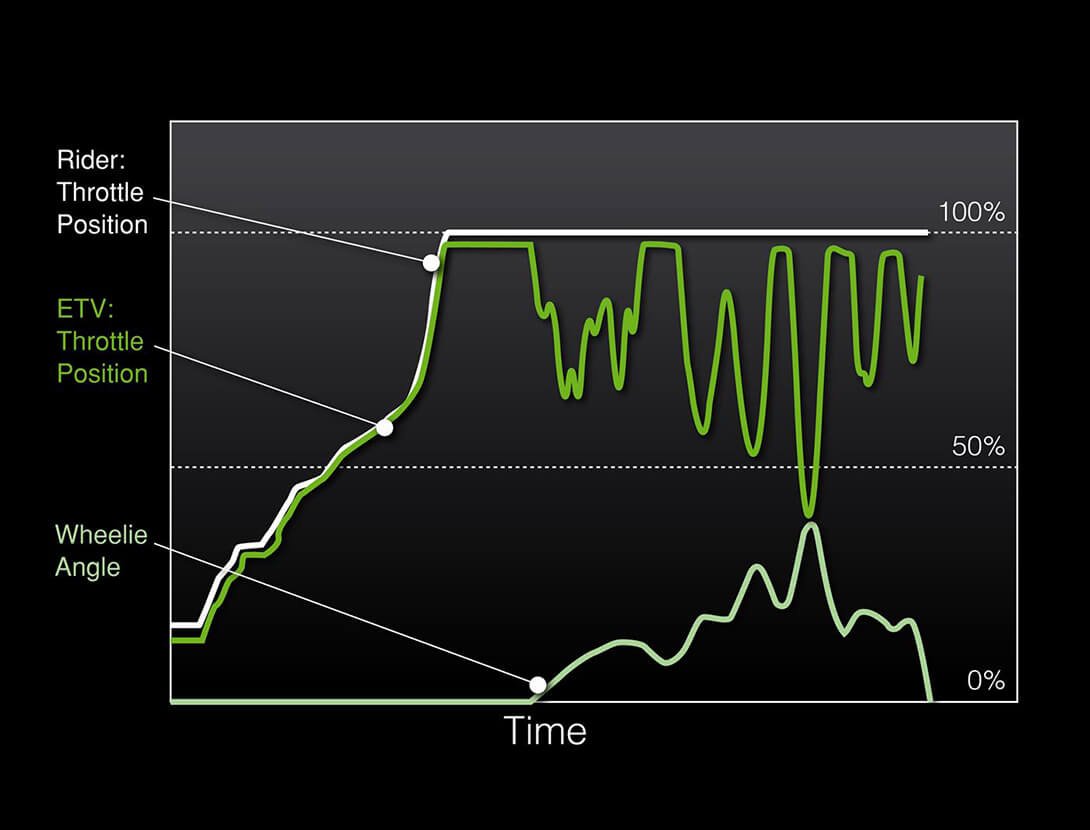
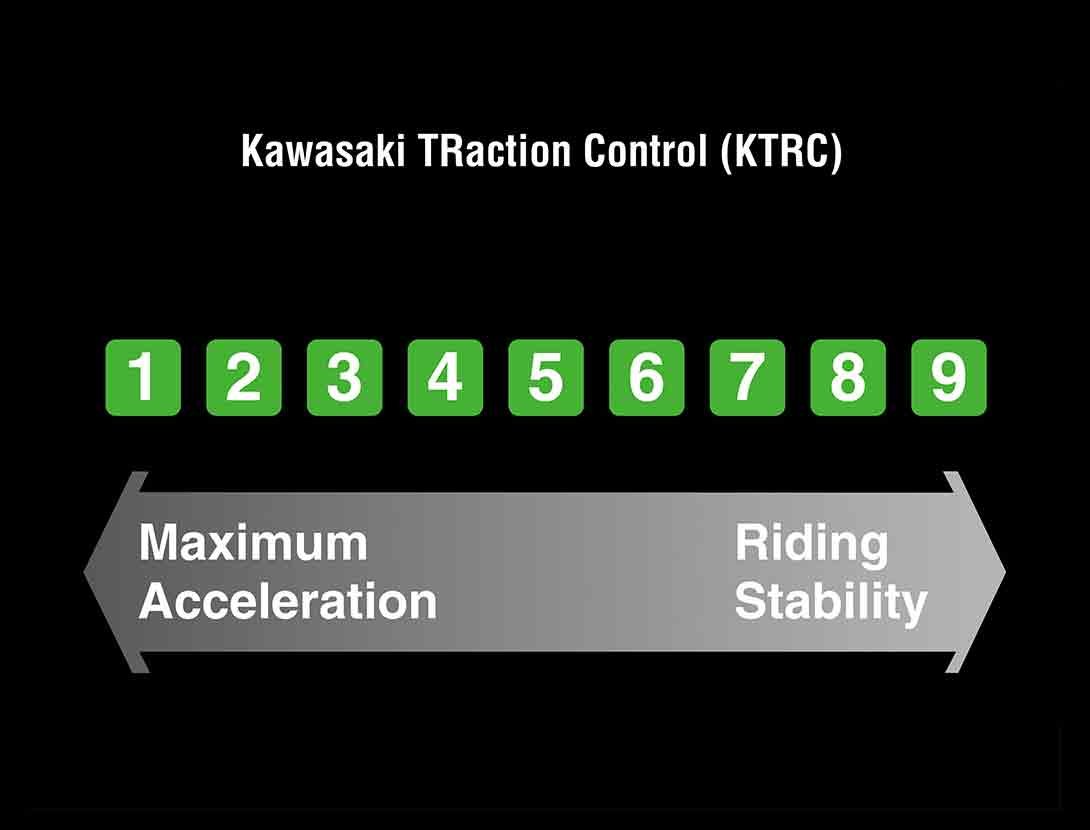 KTRC (KAWASAKI TRACTION CONTROL)
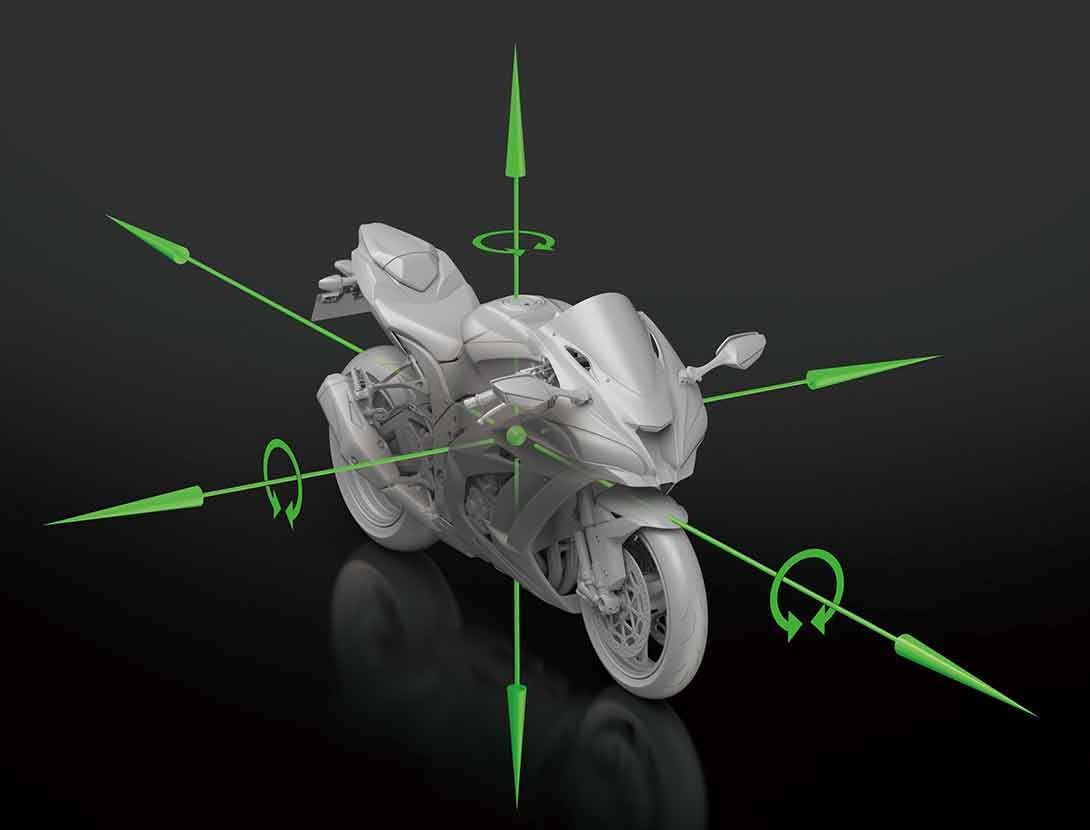 IMU-ENHANCED CHASSIS ORIENTATION AWARENESS
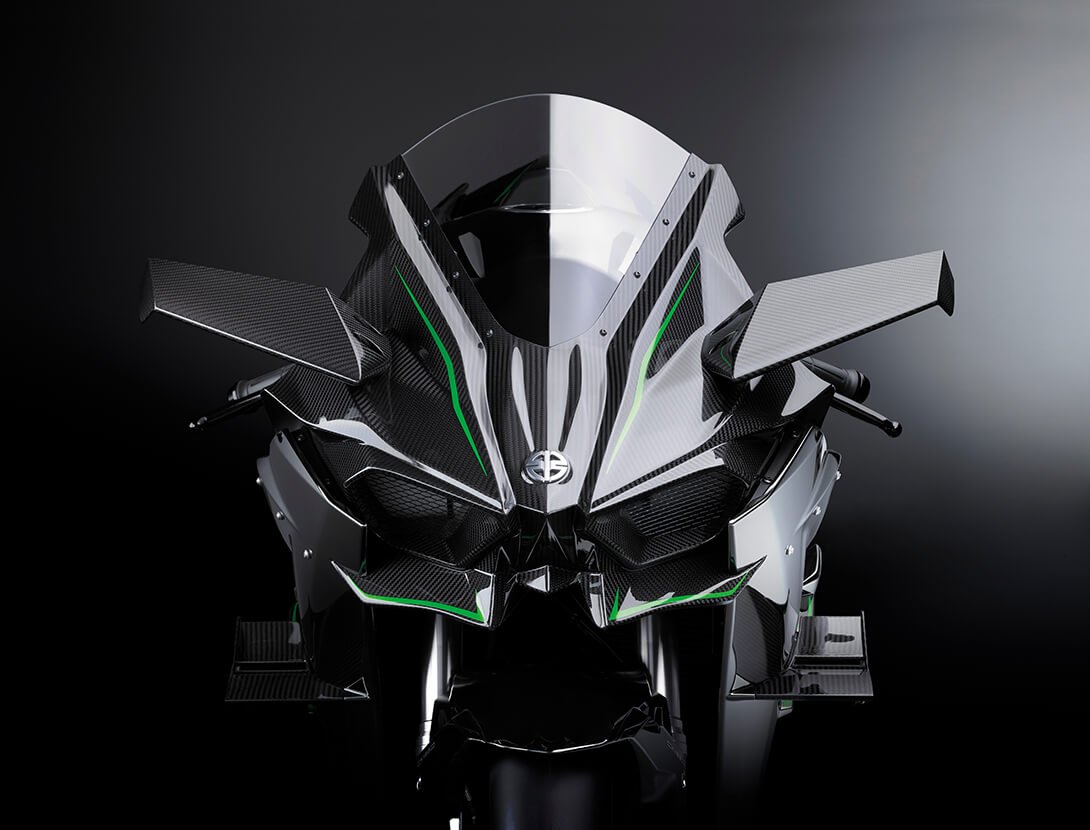 SILVER-MIRROR PAINT
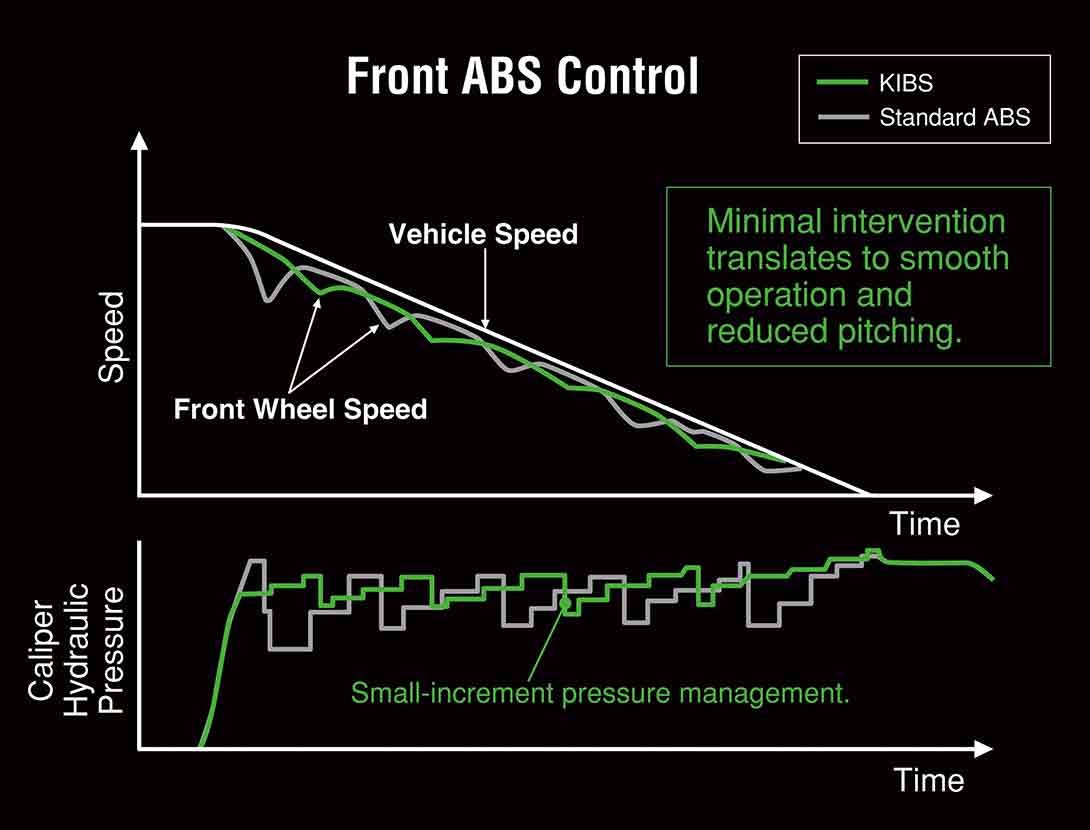 KIBS (KAWASAKI INTELLIGENT ANTI-LOCK BRAKE SYSTEM)